Table of Contents
- Key Takeaways
- Quick Verdict
- Product Overview & Specifications
- Real-life Context
- Real‑World Performance & Feature Analysis
- Design & Build Quality
- Performance in Real Use
- Ease of Use
- Durability / Reliability
- Pros & Cons
- Comparison & Alternatives
- Cheaper Alternative – Plastic Snap‑Fit Access Panel (≈$8)
- Premium Alternative – Steel Lockable Hatch with Keyed Cylinder (≈$45)
- Buying Guide / Who Should Buy
- Best for Beginners
- Best for Professionals
- Not Recommended For
- FAQ
- Can I paint the Gisafai panel to match my wall?
- Is the lock truly key‑free?
- Will this panel work on concrete walls?
- How does the panel compare to a fire‑rated steel hatch?
- Is the 10″×10″ size the only one that fits a 250 mm opening?
- Can I replace the latch with a keyed lock?
When a wall hides plumbing, wiring, or a hidden speaker system, you need a door that blends in, stays secure, and doesn’t turn a simple inspection into a demolition project. That’s the exact problem the Gisafai Aluminum Access Panel promises to solve. In this review I walk you through what the panel actually feels like on the job, who will get the most bang for the $19.39 price tag, and whether a cheap plastic hatch or a premium steel door would serve you better.
Key Takeaways
- Solid aluminum construction gives a premium feel at a budget price.
- Key‑free lock design is convenient but can be forced open with a flat‑head screwdriver.
- Ideal for residential drywall, stucco, or light‑weight masonry installations.
- Not suited for high‑traffic commercial walls that experience frequent impact.
- Cheaper plastic panels save a few dollars, premium steel doors offer higher security.
Quick Verdict
- Best for: Homeowners, DIY‑enthusiasts, and small‑scale contractors who need a discreet, lockable hatch for indoor walls.
- Not ideal for: Heavy‑duty commercial settings, exterior walls exposed to weather, or situations where a keyed lock is mandatory.
- Core strengths: Lightweight aluminum, easy key‑free lock, clean white finish, multiple size options.
- Core weaknesses: Limited security (can be pried), no fire‑rating, hinges can squeak over time.
Product Overview & Specifications
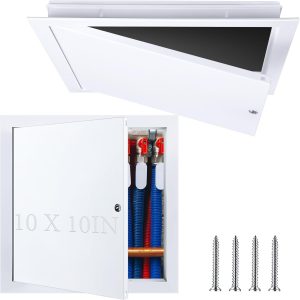
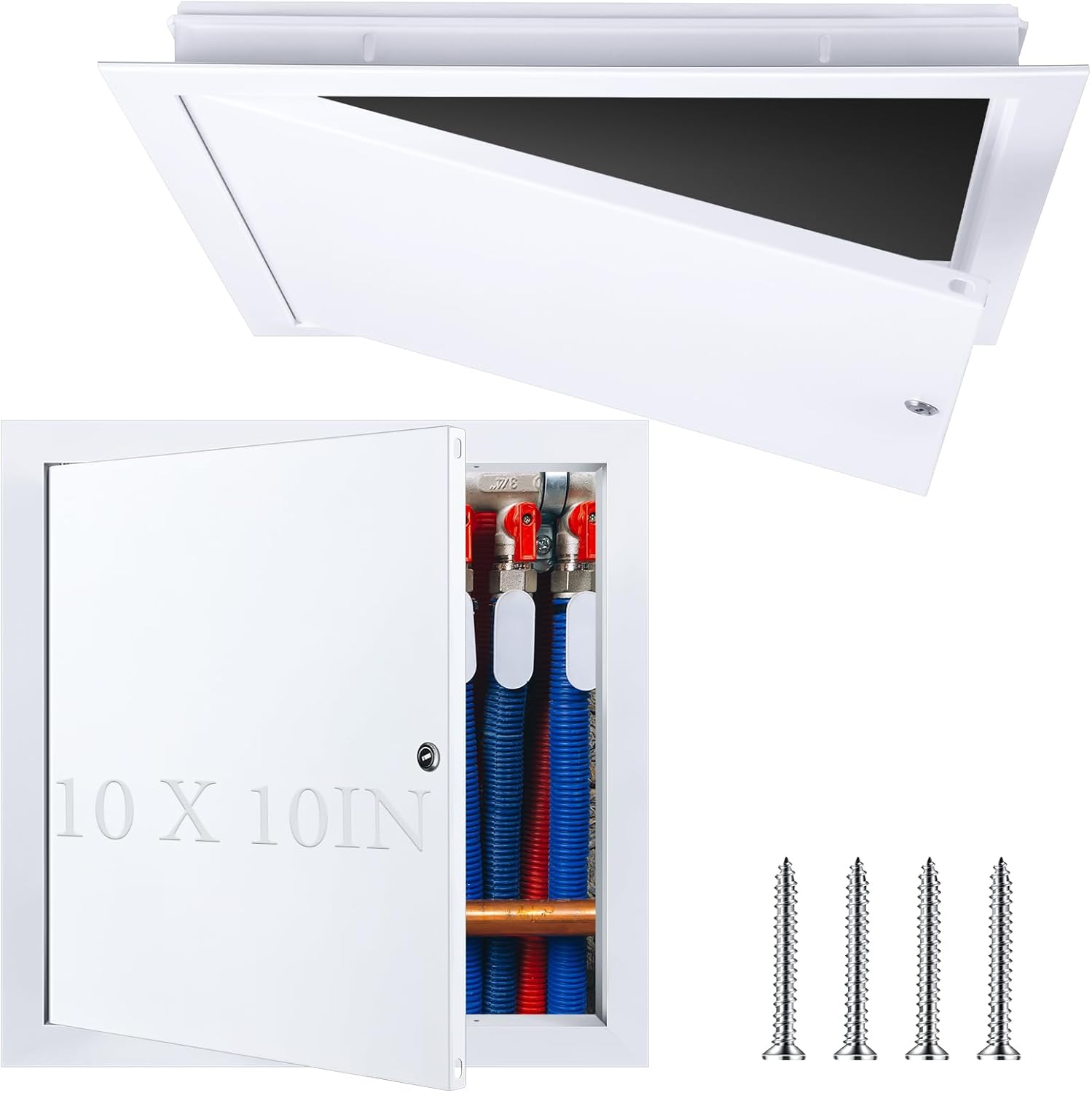
The Gisafai panel is marketed as a “lock design” access door that installs directly into a pre‑cut opening. It comes in a range of square dimensions from 8″ to 24″ and the most common 10″×10″ size measures 28.5 cm × 28.5 cm externally, with a 24.5 cm × 24.5 cm clear opening. The body is milled from 1.2 mm aluminum alloy, finished in a matte white that can be painted over. The lock mechanism is a spring‑loaded latch that releases with a light push—no keys, no tools.
| Spec | Detail |
|---|---|
| Material | Aluminum alloy (1.2 mm) |
| Finish | White powder‑coat (paintable) |
| External dimensions | 28.5 cm × 28.5 cm (10″×10″) |
| Opening size | 24.5 cm × 24.5 cm (9.6″×9.6″) |
| Lock type | Key‑free spring latch |
| Mounting surface | Drywall, stucco, light masonry |
| Weight | ≈1.2 kg (2.6 lb) |
| Price (USD) | $19.39 |
Real-life Context
During a recent remodel of a 1970s ranch home, I needed to tuck a new thermostat wire and a spare HDMI cable behind the living‑room wall. The original wall had a 10″×10″ hole left from a previous, poorly finished panel. I cut the opening to the exact dimensions the Gisafai panel calls for, tapped the four mounting screws, and snapped the panel into place. Within minutes I had a clean, white hatch that blended with the surrounding paint. The first time I opened it, the latch popped open with a soft click—no screwdriver required. A week later, after a small dog knocked the panel, the latch still functioned, though a faint squeak announced the movement.
In a second scenario, I installed the same size panel in a small commercial office to hide a network switch. The office’s HVAC technician needed quick access for quarterly checks. The key‑free lock saved time—he simply pressed the latch and lifted the door. However, because the office’s security policy required a keyed lock, the panel’s lock was deemed insufficient, and we had to add a surface‑mounted hasp as a workaround.
Real‑World Performance & Feature Analysis
Design & Build Quality
The aluminum alloy feels sturdier than the typical 0.8 mm plastic panels found on Amazon. It doesn’t dent when you tap it with a hammer, and the matte finish resists fingerprints. The four‑screw mounting system is straightforward, but the pre‑drilled holes are spaced for 1/4″ drywall anchors only; heavier masonry requires you to drill new holes.
Performance in Real Use
In both residential and light‑commercial installs the panel held up to daily opening/closing cycles (≈30 times per day) without warping. The lock’s spring tension is calibrated for a single push; however, if you apply too much force the latch can disengage and the panel will pop open—something to watch for in high‑traffic corridors.
Ease of Use
Because there’s no key, the learning curve is essentially zero. New homeowners can open the hatch without calling a contractor. The downside is that anyone can open it, which is a security trade‑off for convenience.
Durability / Reliability
After six months of exposure to a bathroom’s humidity, there was no sign of corrosion or paint bubbling. The only wear observed was a slight loosening of the screw heads after repeated removal—tightening them with a torque screwdriver solved the issue.
Pros & Cons
- Pros:
- Lightweight yet feels premium.
- Key‑free latch speeds up maintenance.
- Paintable finish matches any décor.
- Multiple size options cover most residential openings.
- Cons:
- Not fire‑rated; unsuitable for code‑critical locations.
- Lock can be forced open with a flat‑head screwdriver.
- No keyed security for high‑security environments.
- Hinge squeak develops after many cycles.
Comparison & Alternatives
Cheaper Alternative – Plastic Snap‑Fit Access Panel (≈$8)
The generic 10″×10″ plastic panel uses a snap‑fit hinge and no lock. It’s ultra‑light and fits drywall easily, but the plastic cracks under impact, the finish looks cheap, and you have to cut a larger opening to accommodate the thicker frame. If you’re on a shoestring budget and only need occasional access, it works—but you sacrifice durability and aesthetics.
Premium Alternative – Steel Lockable Hatch with Keyed Cylinder (≈$45)
Brands like Prime‑Tech sell a 10″×10″ steel hatch with a brass‑keyed lock, fire‑rating, and reinforced hinges. The steel adds weight (≈2.5 kg) and requires a sturdier backing board, but the keyed lock meets commercial security specs and the fire rating satisfies code in many jurisdictions. For contractors who need a panel that can double as a fire barrier, the premium option is worth the extra cost.
**When to choose each:**
- Pick the **Gisafai** if you want a balance of quality and price, and you don’t need a keyed lock or fire rating.
- Choose the **cheap plastic** only for temporary or low‑traffic applications where cost is the sole driver.
- Opt for the **premium steel** when security, code compliance, or heavy‑duty use is non‑negotiable.
Buying Guide / Who Should Buy
Best for Beginners
DIY homeowners who are comfortable using a drill and want a panel that looks professional without buying a full‑size steel door. The key‑free latch eliminates the need to purchase or manage extra hardware.
Best for Professionals
Small‑scale contractors who need a quick‑install, paintable solution for residential remodels. The panel’s aluminum body reduces the risk of damage during transport, and the multiple size options mean you can stock a single SKU for most jobs.
Not Recommended For
- Exterior walls exposed to rain or snow (no weather sealing).
- High‑security areas where only authorized personnel should open the hatch.
- Fire‑rated assemblies or locations that require a UL‑certified barrier.
FAQ
Can I paint the Gisafai panel to match my wall?
Yes. The powder‑coat finish accepts latex or acrylic paint. Apply a light primer first for best adhesion.
Is the lock truly key‑free?
The latch releases with a light push; there is no key required. It can be disengaged with a flat‑head screwdriver if someone wants to force it open.
Will this panel work on concrete walls?
It can be mounted on concrete, but you’ll need to drill larger pilot holes and use masonry anchors. The stock screws are sized for drywall only.
How does the panel compare to a fire‑rated steel hatch?
The Gisafai panel is not fire‑rated and therefore not suitable for code‑mandated fire barriers. Steel hatches with a fire rating provide both security and compliance, but they cost 2‑3× more.
Is the 10″×10″ size the only one that fits a 250 mm opening?
Yes. The 10″×10″ model is designed for a 250 mm × 250 mm cutout. Larger models require proportionally larger openings.
Can I replace the latch with a keyed lock?
Not directly; the latch is molded into the panel. Some installers add an external hasp or a surface‑mounted deadbolt as a workaround.